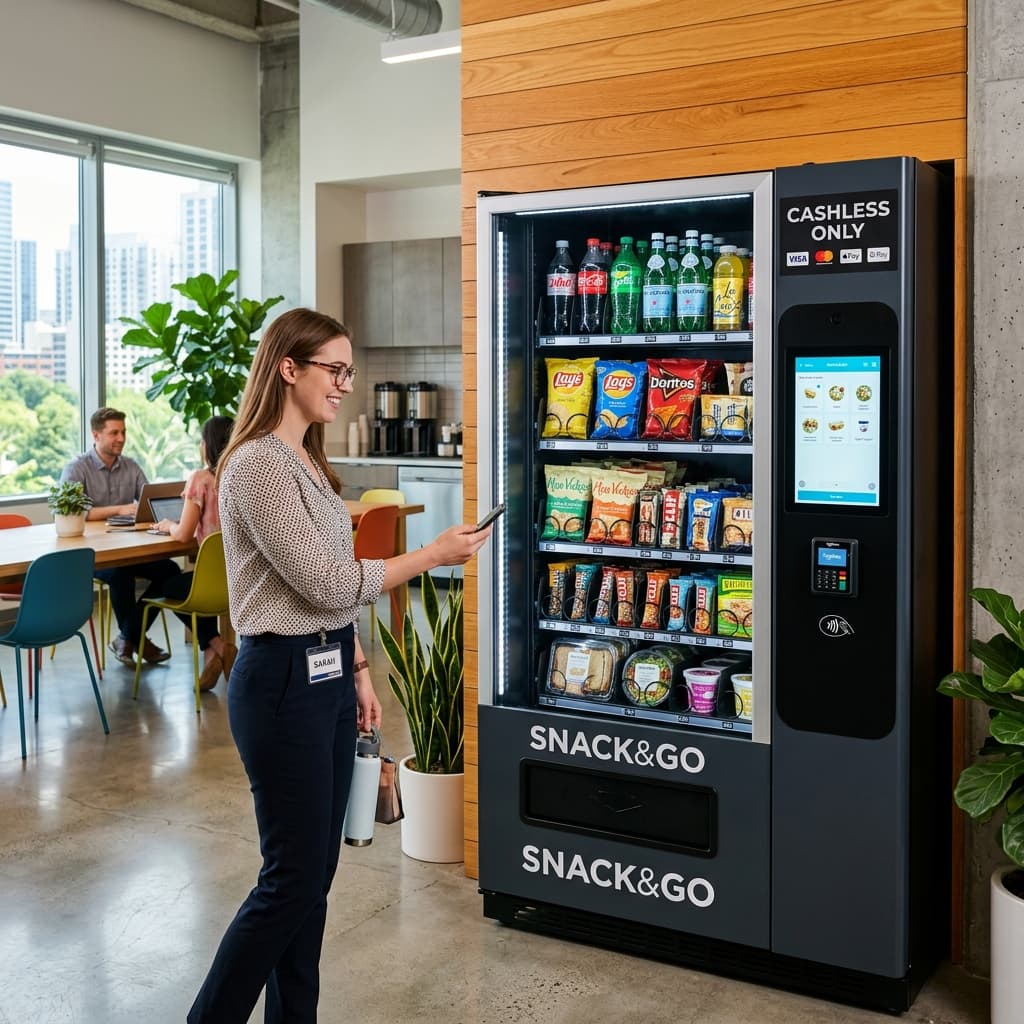
Compare the purchase experience
Vending keeps products inside equipment until the customer pays. A micro market uses open shelving, coolers, and checkout. The wider display can be useful for a defined workplace community, while a compact vending unit may fit a smaller staff room. Confirm payment methods on the actual equipment, rather than assuming every setup offers the same features.
Match the format to the location
Review daily attendance, break periods, space, connectivity, and service access with the provider. Ask about inventory control and fresh-food routines if those products are proposed. Neither format is automatically better for every business. A written recommendation should explain why the suggested capacity and product range fit the people using the room.
Prepare for an assessment
Bring your site address, daily attendance, shift schedule, available space, and delivery restrictions. Confirm product pricing, support contacts, stocking, and responsibilities before approving installation. Revisit the plan after the first month to identify products that sell out, items that remain untouched, and any access or payment issues.
For a more detailed checklist, read our Lakeland business guide to vending and micro markets. Then request a quote with your location and preferred services. No-cost vending placement depends on location approval; products and optional coffee or water programs may have separate charges.